
CBRE, Marina Bay Financial Centre
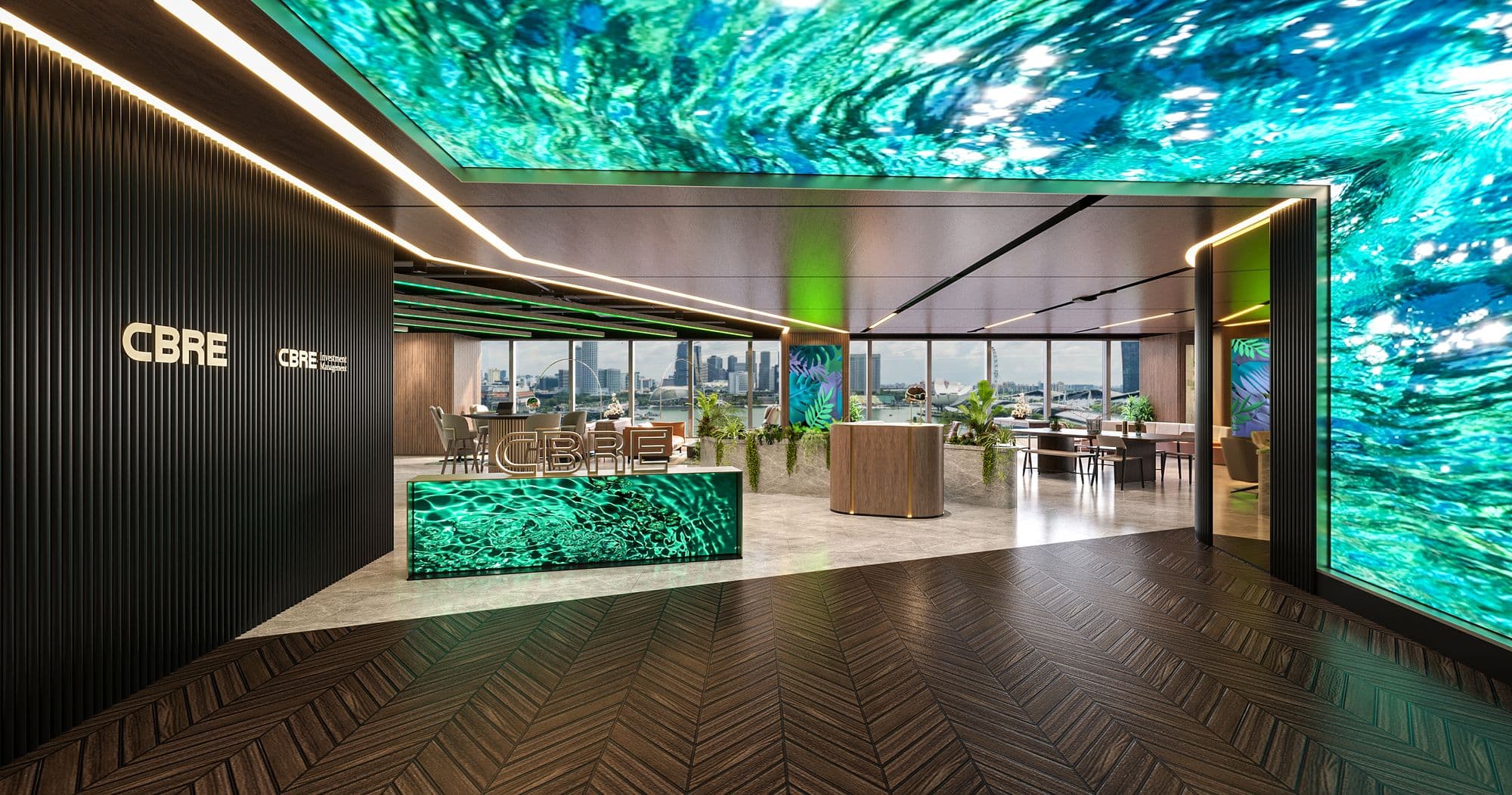
CBRE set the brief as a flagship office experience that represents what today's technology can truly deliver. The boardroom was the hardest part of it.
- Sector
- Commercial office, occupier fit-out
- Location
- Singapore
- Year
- 2025
- Stages used
- Strategy / Design / Specification
Led by Simon Long as Senior Director of Technology Consulting at CBRE, before founding SQRD.
Recognition
01 / 03- Corporate Project
InAVate APAC Awards 2025
- Tony Stark Award
CoreNet Global Singapore REAwards 2025
Awarded to CBRE's Client Technology Consulting Team for MBFC, with Simon Long as the named representative.
- average reduction in power use per meeting room
- 22%
- CO2 saved per room, per year
- 65kg
- sensors tracking noise, CO2, PM2.5, TVOC and plant health
- 56
- PoE speakers across fourteen biophilic audio zones
- 116
What we did
02 / 03Technology sat in the design from concept, alongside architecture and interiors, rather than being specified once the plan was frozen. That is the whole argument, and it is why the outcomes below were available at all. Bolt technology on at the end and you are decorating a building somebody else has already constrained.
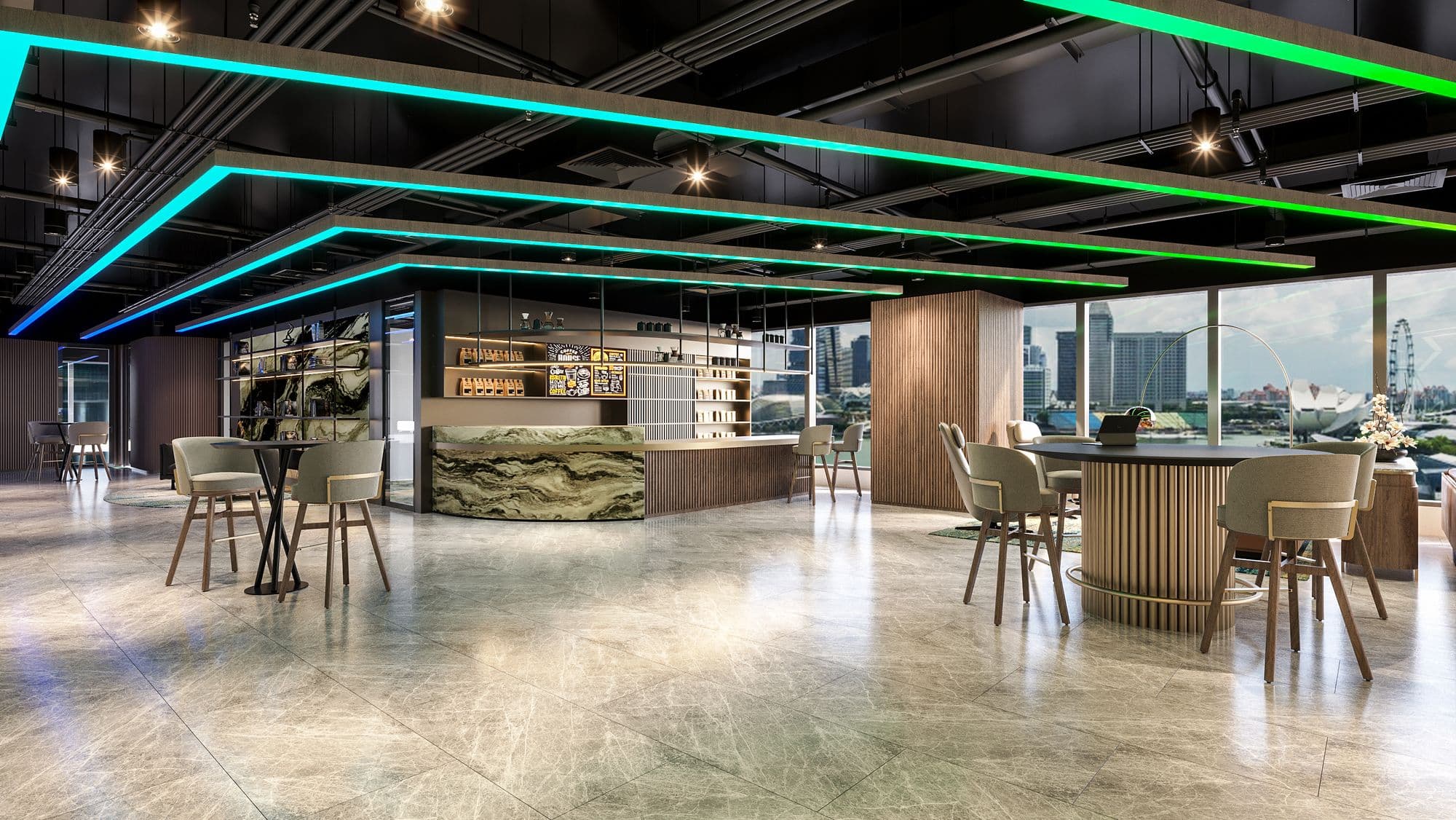
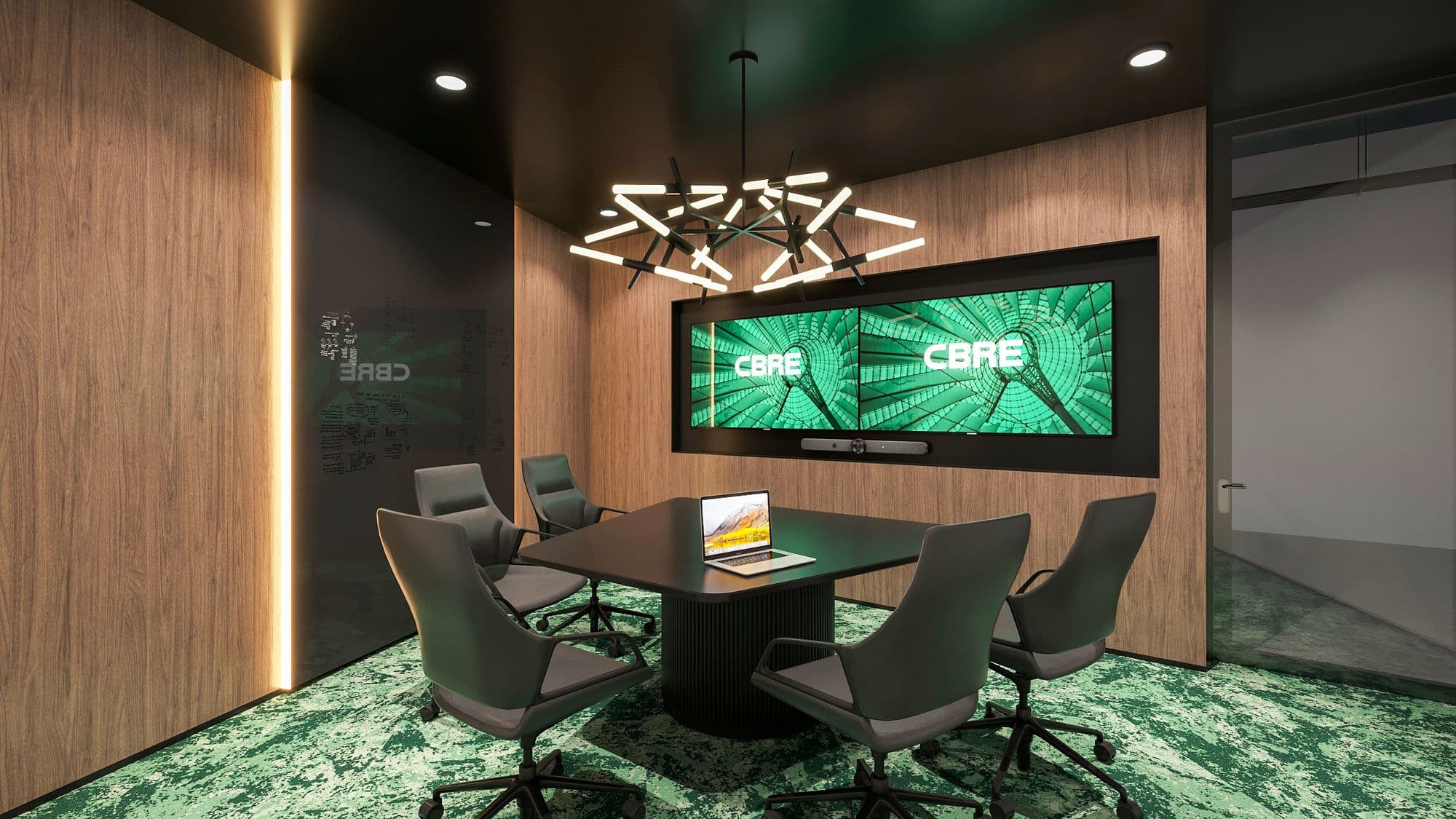
The boardroom is where that brief got tested. The most expensive room in an organisation is the one that gets used the least, and the usual response is to make it grander. Instead the dividing panels slide away around the corner and the tables are fully modular, so the room stops being a boardroom the moment it needs to be something else. Across the floor the same thinking took the estate from nine meeting rooms to twenty eight, at a one to one ratio between desks and meeting seats.
Adaptability was designed in rather than promised. 116 Power over Ethernet speakers run across fourteen biophilic audio zones, so a zone can change shape, size and speaker count in a few clicks rather than a refit. Every meeting room carries four lighting profiles, from presenting at 4,200 Kelvin to a warm, soft setting for focused work, and every room meets neurodivergent standards rather than a token few.
56 sensors track noise, CO2, PM2.5, TVOC and plant health, and the readings drive decisions rather than dashboards. A focus room running above 48 decibels is somebody on a video call, which tells you whether the estate has enough video rooms without anyone being surveyed. CO2 above threshold for ten minutes tells the building management system to circulate more air, on its own.
Every meeting room was put on its own electrical circuit, tied to daylight and occupancy sensing. That single decision produced a twenty two per cent average reduction in power use per room. The hard part was never the technology. It was the coordination across disciplines, which ran far beyond what anyone planned for, and which is precisely the work an independent technology lead exists to hold together.
Outcome
03 / 03A workplace that feels alive.
“This project has transformed our expectations of what modern office technology can deliver. The seamless integration of AV, lighting, and environmental intelligence has created a workplace that feels alive. It's responsive, human and inspiring. Our people and clients love it.”
Got a space that should be doing more?